
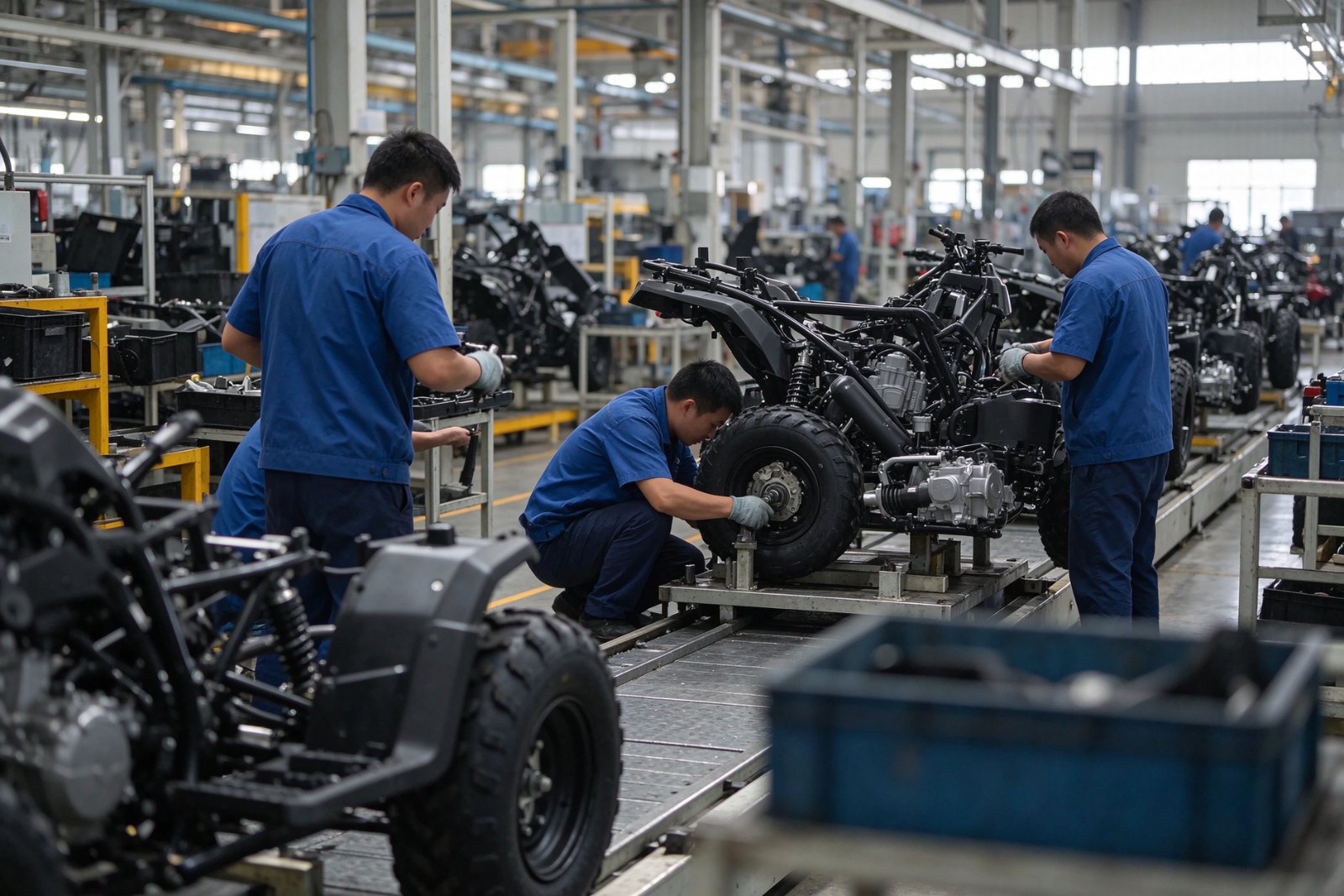
Yamaha has confirmed that it will end U.S. side-by-side production and refocus its Newnan facility on ATV production, alongside improvements in procurement efficiency and expanded output. The move came as the company posted record first-half earnings, which makes the decision a strategic reallocation rather than a retreat.
The change was reported in Powersports Business’ ATV news coverage alongside a cluster of 2027 model announcements from Can-Am, Arctic Cat and Polaris.
Why capacity decisions matter to buyers
- Model availability follows the plant. When a factory changes product mix, some models get longer lead times and others get shortened. Dealers who plan stock six months out feel it first.
- ATV capacity is being treated as strategic. That is a strong signal about where manufacturers expect durable volume: utility ATVs, not just sport side-by-sides.
- Procurement efficiency is the real headline. Cost pressure in the category is coming from supply chain and tariffs, not from demand.
The read-across for the value tier
When a major brand concentrates capacity in ATVs, the mid and value tiers get more competitive: more models, more dealer attention and more price pressure. Independent manufacturers have to answer with speed, flexibility and documentation rather than badge equity.
MODOU VEHICLE operates on exactly that model. A 200cc MD-D2 and a 350cc MD-D3H can be configured for a distributor’s market, packed with spare parts in the same shipment, and supported with specification sheets that a dealer can publish directly. That responsiveness is the advantage a factory-direct supplier has over a global brand’s regional allocation.
What to watch next
Whether other manufacturers follow with their own capacity changes in 2027, and whether ATV output growth translates into more aggressive utility-focused model launches in the 300 to 700cc band.