
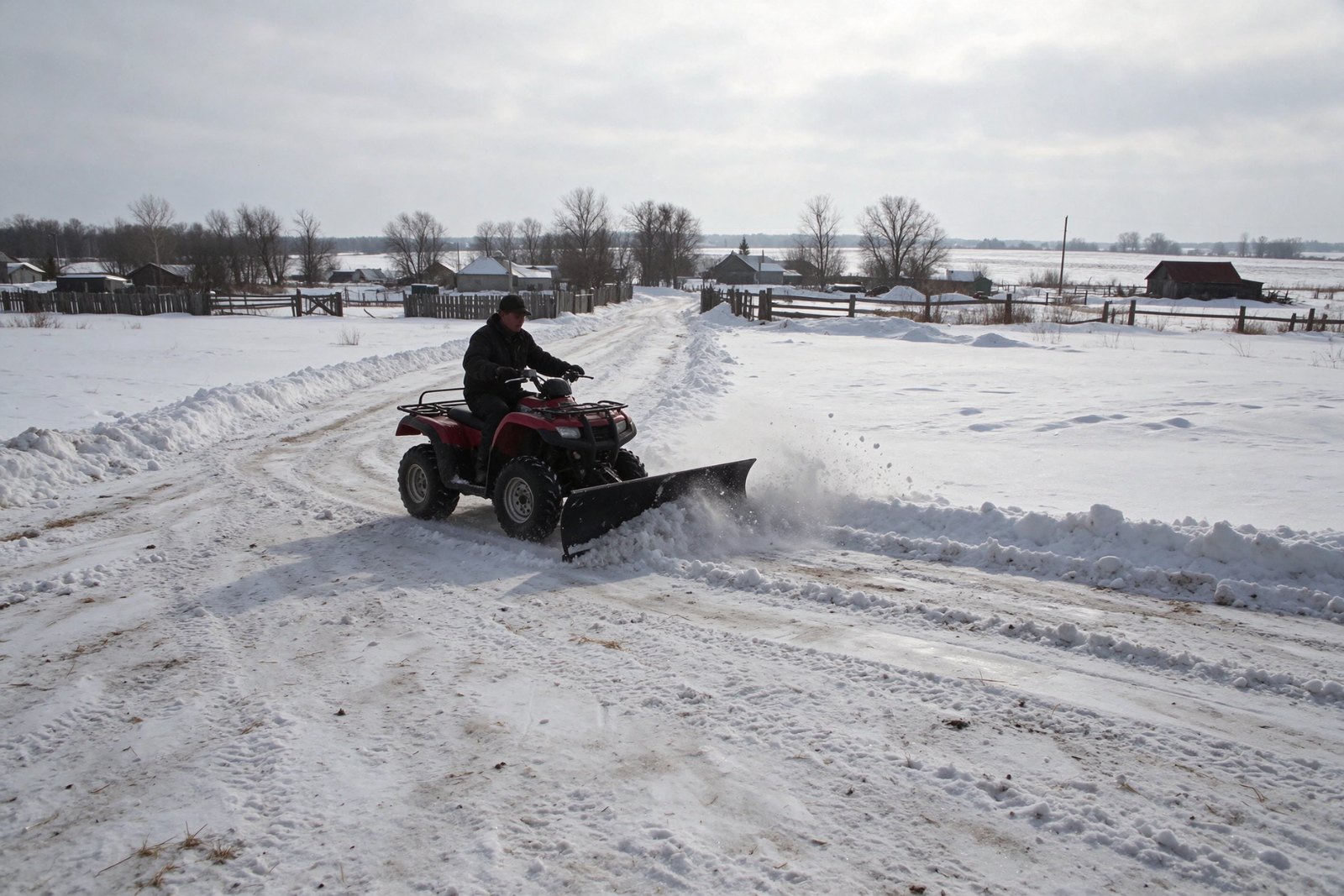
The first hard frost is the deadline, and the work order matters more than the work. With plow season opening and seasonal trail closures in force across the northern states, including Clark County’s November-to-December shutdown, the machines that are about to work hardest are the ones that were maintained least.
What actually changed
- Battery first. Cold reduces capacity exactly when starting load rises; test, then replace if it is marginal.
- Belts and bearings second. A worn belt that survives summer will slip under a plow load in January.
- Tyres and chains third. Traction on packed snow is a tread and chain question, not a horsepower question.
- Plow mount last. Check the frame, the lift geometry and the hardware before the first storm, not during it.
There is a sequencing logic here that saves real money. A weak battery masks as a dozen other faults, so testing it first prevents misdiagnosis. A slipping belt under load feels like a transmission problem, so checking it before condemning anything expensive is basic discipline.
For a fleet, the same list applies at scale: every machine gets the same inspection sheet, the same torque values and the same sign-off, and the records become the warranty file you will want in March.
Where MODOU VEHICLE fits
At MODOU VEHICLE (Yongkang Modou Vehicle Co., Ltd.) we build the practical end of this market: agricultural ATVs from 200cc to 350cc, electric ATVs, gasoline ATVs and utility machines that farms, estates and rental operators actually put to work. The MD-D3H is the model most of our dealers specify for heavy winter work where a 350cc machine has to push snow and still haul feed. Every unit leaves the line with a shaft or chain drivetrain tuned for load, a locking rear differential where the terrain demands it, and a rack and towing package sized to the engine, not to the brochure.
The bottom line
Service in October, not in the storm. The order of the checklist is the cheapest diagnostic tool on the farm.