
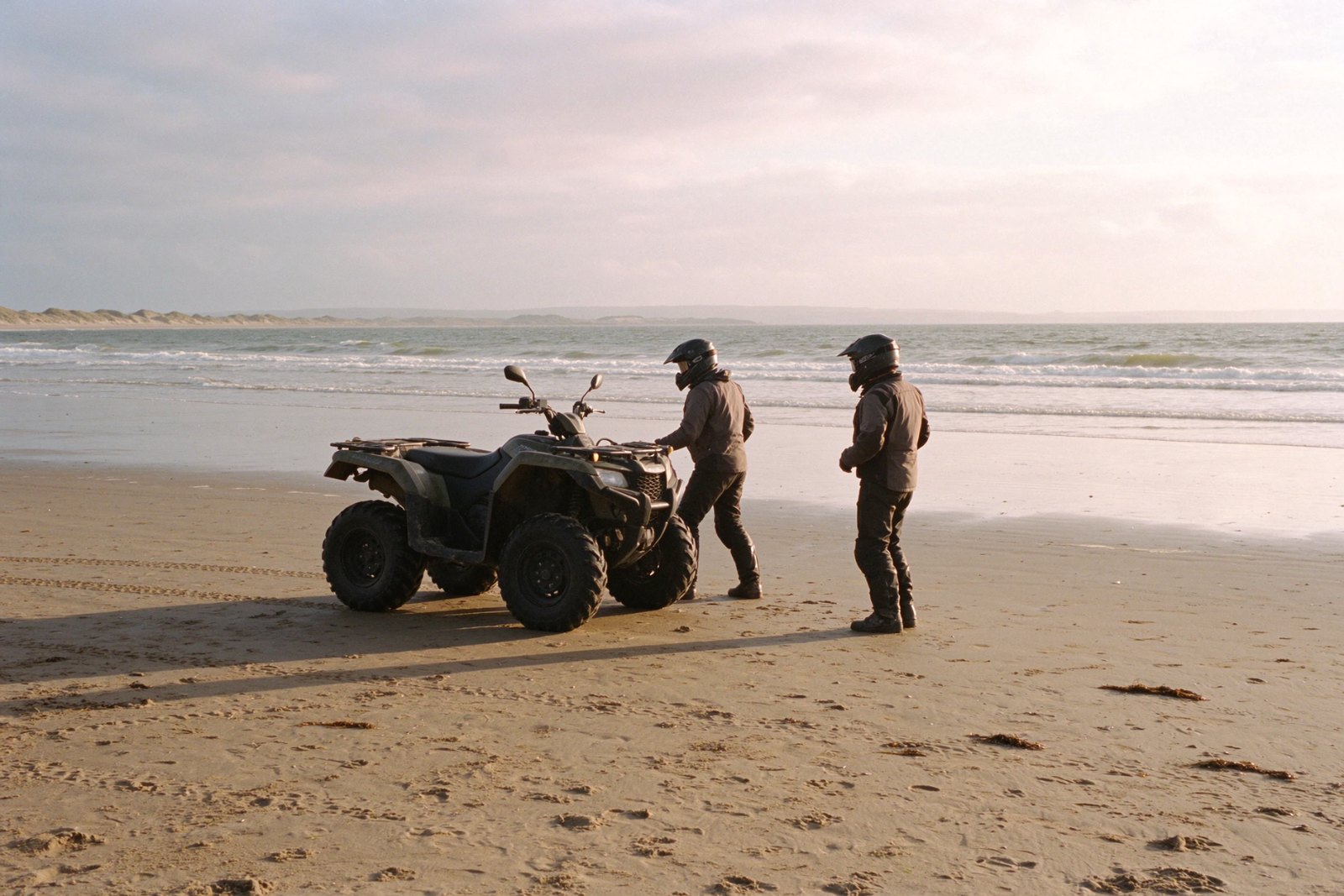
Worimi Conservation Lands, north of Newcastle in New South Wales, offers more than 19 km of beach front and over 350 hectares of dune driving in the Recreational Vehicle Area at Stockton Beach. It is one of the largest coastal dune areas in the state, and it is heavily regulated.
According to the park’s driving guidance, every vehicle must be registered and hold a valid beach vehicle permit, including quads and trail bikes, which must carry RMS conditional registration. Dune buggies and similar vehicles cannot be conditionally registered and are not permitted at all.
The operating rules
- 40 km/h maximum on the beach, reduced to 20 km/h within 100 metres of pedestrians or other vehicles.
- Daylight riding only for conditionally registered machines.
- No launching off dune slopes, and no driving over vegetation or shell accumulations that may mark cultural sites.
- All passengers seated inside with seatbelts; riding on the back or being towed is illegal.
- Pedestrians have priority at all times.
Why the rules are strict
The area carries Aboriginal cultural significance and fragile dune vegetation. Access survives because users follow tracks, respect closures and keep speeds down. A flag is recommended so vehicles are visible over dune crests, a simple measure that prevents the most common collision scenario.
What makes a good beach quad
Four-wheel drive, decent ground clearance, sealed air intake, and a drivetrain that tolerates salt. Belt drives suffer in fine sand and salt water; shaft drive avoids both. MODOU VEHICLE builds the MD-XL4 and MD-XL5 with shaft drive and water-cooled engines for exactly this kind of mixed coastal use, and the lighter 300cc MD-XL3 suits riders who want a smaller machine for sand and trails.
Post-ride routine
Low-pressure washing, fresh-water rinse on brakes and bearings, and a check of the air filter after every beach session. Salt is patient; it works on the machine long after the trip is over.