
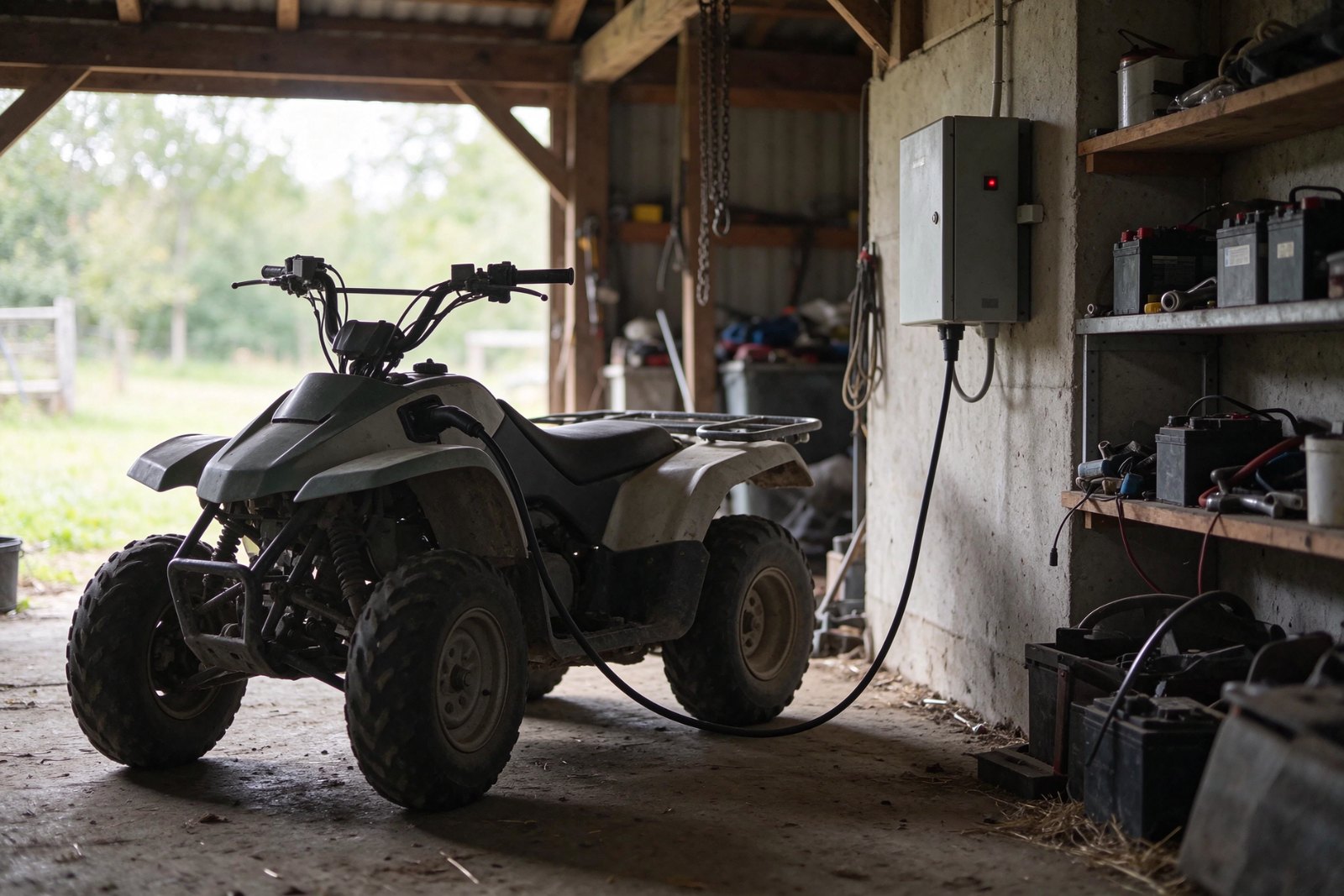
An electric ATV is not a quieter version of a petrol quad. It is a different tool with a different duty cycle, and the farms that get value from one are the farms that allocate work to it deliberately.
Where electric wins outright
- Livestock checks. Cattle and sheep react differently to a machine that makes no engine noise. Repeated short loops around a yard or pasture are exactly the duty an electric drivetrain handles best.
- Indoor and enclosed work. Barns, poultry houses and polytunnels have no exhaust emissions and no refuelling risk with an electric machine.
- Night and early-morning work. No engine warm-up, no noise complaint from neighbours, and instant torque for a slow, controlled start.
- Running cost. Electricity per hour is a fraction of petrol, and there is no oil change, no belt, no valve service.
Where it loses
Distance, cold and sustained towing. Battery capacity falls in low temperatures, which is exactly when winter feeding matters. A long trip to a far field consumes a disproportionate share of range. And a loaded trailer on a slope drains a pack faster than any other duty.
How to plan a mixed fleet
Map the day in trips. If 80 percent of journeys are under 5 km and the machine returns to a shed between them, electric is straightforward. If the pattern is one 30 km loop with a trailer, keep a combustion machine for that job.
MODOU VEHICLE supplies both sides of that mix. The 72V MD-XL2E and MD-D2E are built for short-range agricultural transport with shaft drive, while the 500cc MD-XL4 covers the long runs. A distributor can offer a farm one parts and service relationship across both.
Charging is the real project
A 72V pack needs a dedicated circuit and a safe, dry charging point, not an extension lead across a wet yard. Plan the charging location before the machine arrives; farms that do this regret the purchase far less often.