
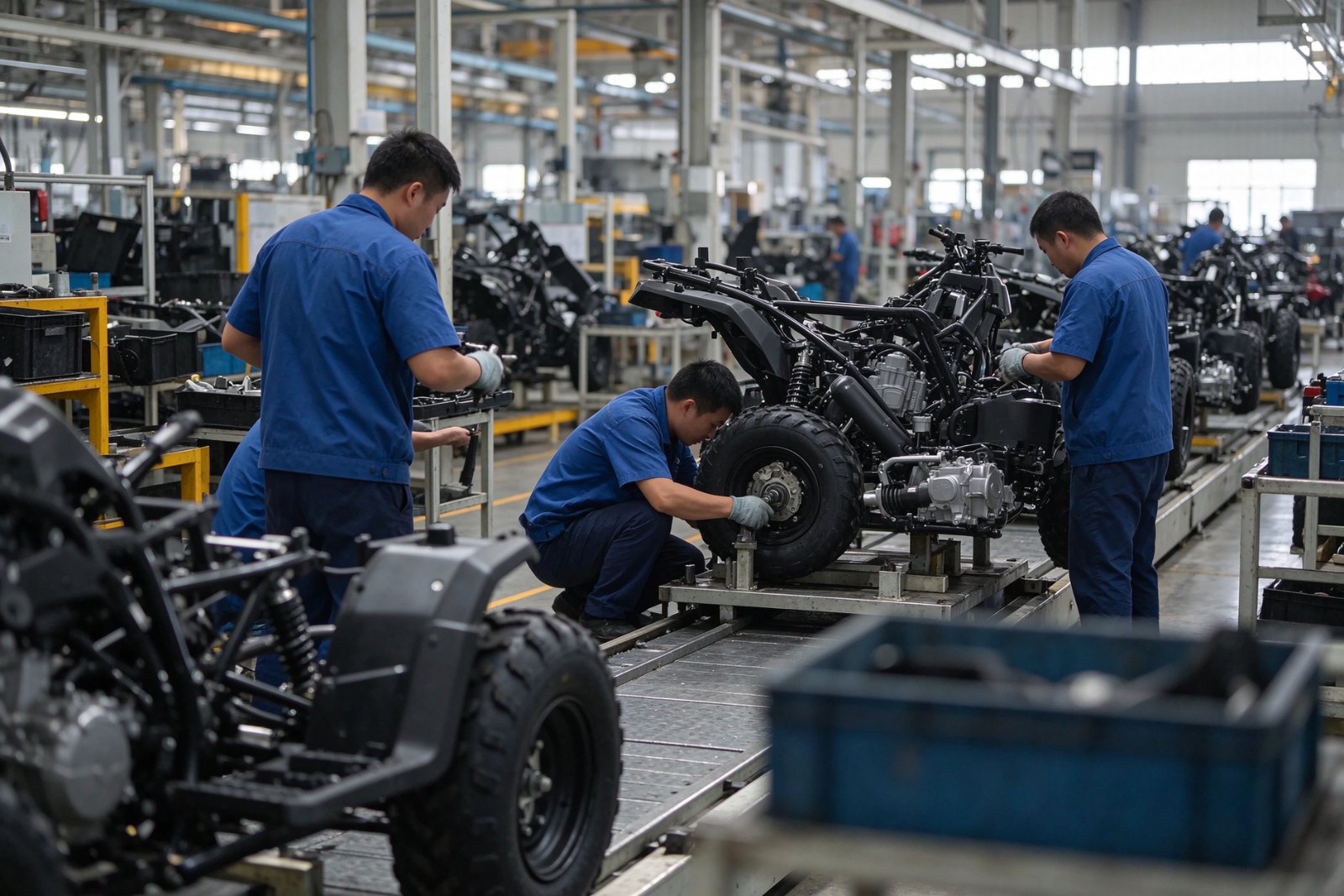
Kandi Technologies reported nine-month 2026 revenue of $82.1 million, up 38.5%, with off-road vehicle and parts revenue up 33.5% to $74.0 million. In October 2026 it began supplying UTVs to a leading North American home-improvement retailer.
What actually changed
- The channel matters more than the number: home-improvement retail reaches rural and suburban buyers who never visit a powersports showroom.
- That channel implies lower price points, simpler specifications and a parts-and-accessories model built for a shelf, not a service bay.
- Kandi’s battery-swap equipment business also began contributing revenue in Q3, funded by CATL-linked orders.
- Off-road vehicles remain the core of the business, which tells you where the margin actually sits.
Why it matters
When an electric UTV shows up next to the mulch and the mowers, the comparison set changes from Polaris to a lawn tractor. Established dealers should expect customers to arrive already anchored on that price.
Where MODOU VEHICLE fits
MODOU VEHICLE’s electric ATVs are built to survive that comparison without cutting the parts that matter — sealed battery enclosure, serviceable motor controller, real ground clearance. The MD-S8E and MD-XL1E are the models dealers can defend on specification rather than sticker.
The bottom line: Retail-channel electric UTVs are not a fad; plan your floor traffic for them.