
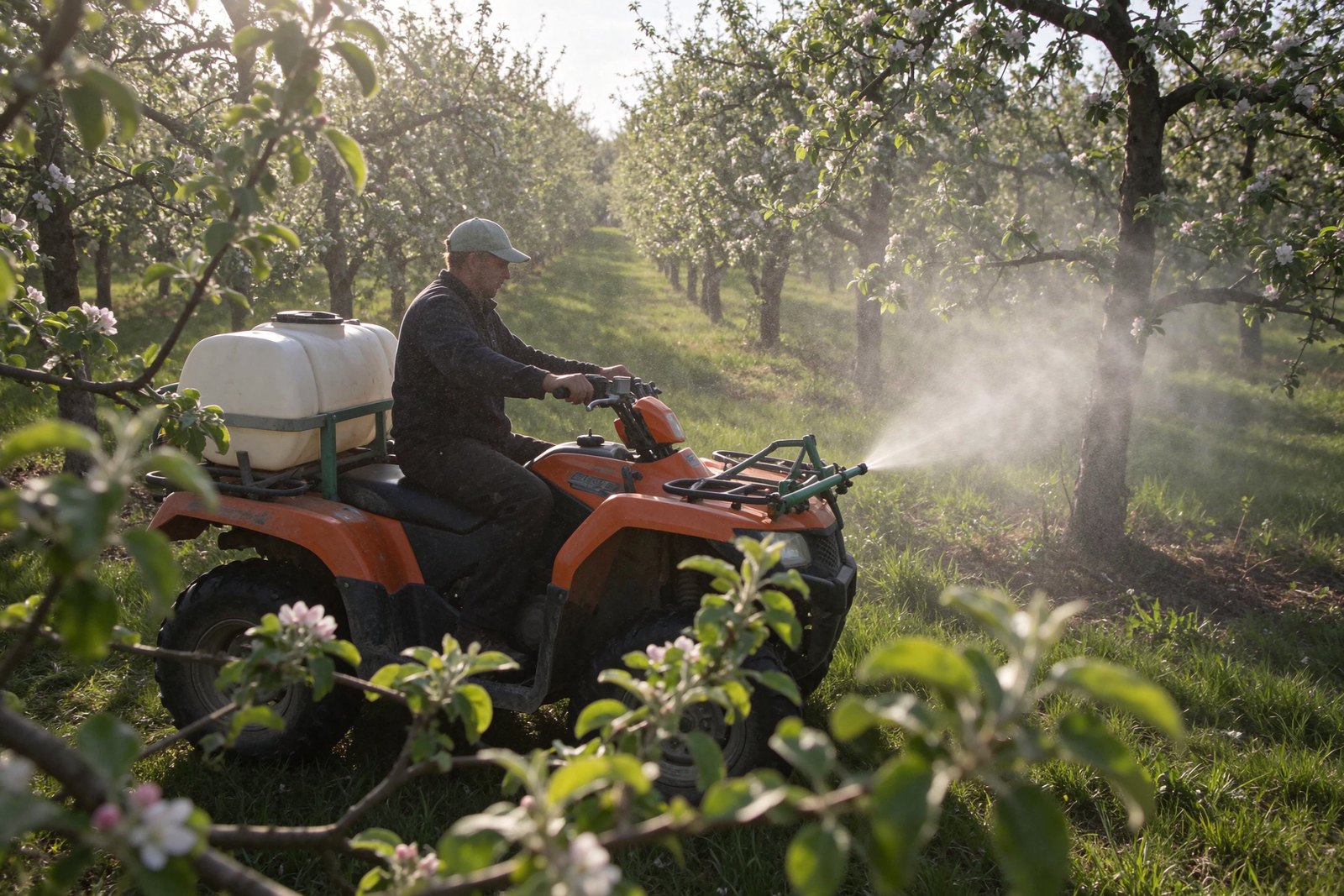
Croplands’ New Zealand and Australian portfolio now includes the Kilter AX-1 autonomous vegetable weeder and the Robotics Plus Prospr multi-use autonomous vehicle for vineyard and orchard production.
What actually changed
- Both machines work inside the same row geometry that a utility ATV has occupied for decades.
- Autonomy handles the repeated, high-precision pass; the UTV still handles the variable, judgement-heavy work around it.
- Labour availability, not technology novelty, is the commercial driver behind adoption in horticulture.
- Buyers now evaluate a UTV partly on whether it can support, service and shadow an autonomous fleet.
Why it matters
Autonomy changes the UTV’s job before it replaces it. Tenders, water carts, tool carriers and recovery vehicles become the human half of a robotic operation, and the farms adopting robots are the ones buying utility vehicles with tighter turning and lower ground pressure.
Where MODOU VEHICLE fits
MODOU VEHICLE designs orchard models around row work: tight turning circle, low-impact tyres and implement mounting front and rear. The MD-D2-2E and MD-XL3 are the practical support platforms.
The bottom line: Automation raises the UTV’s value as support equipment, not lowers it.