
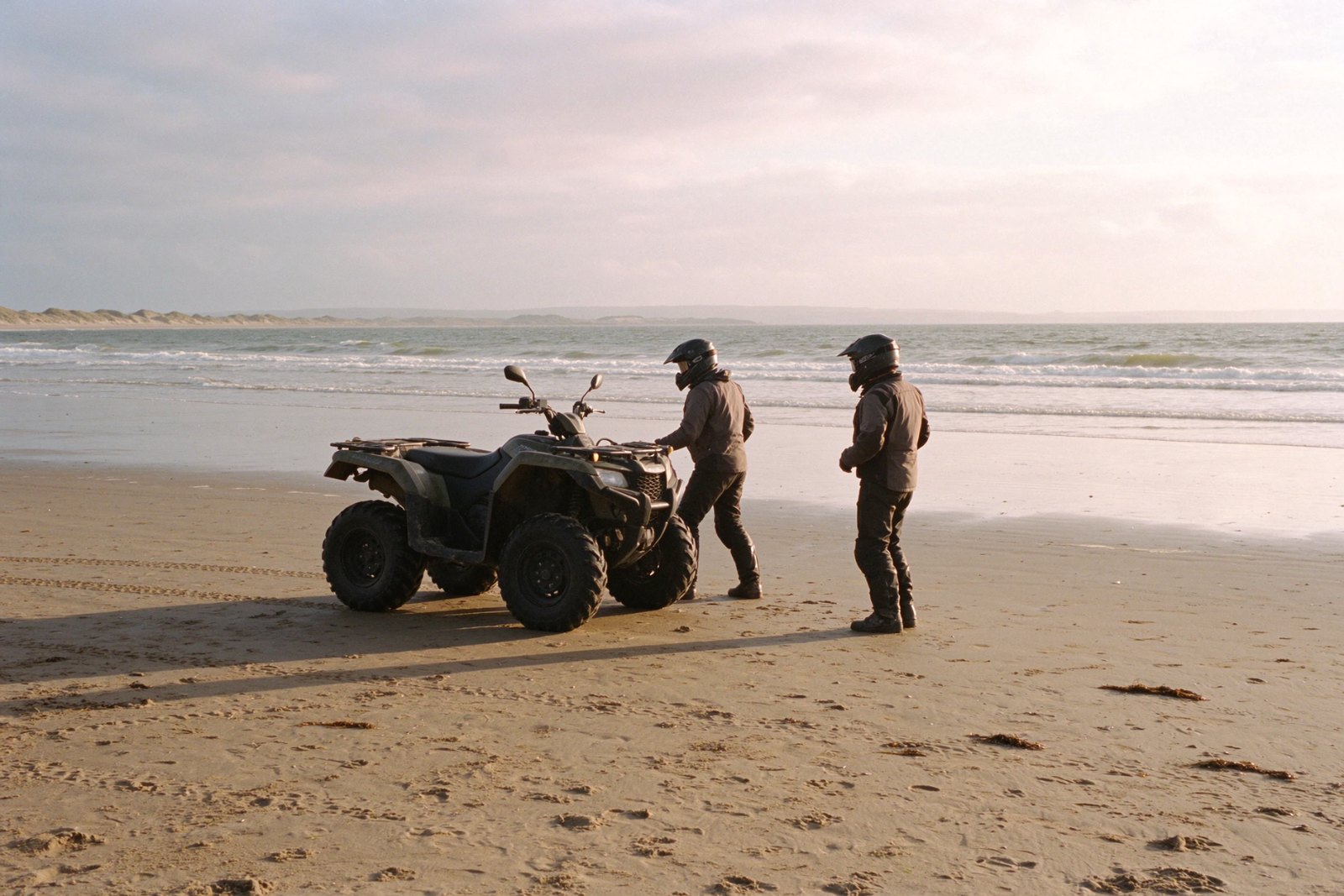
Salt water does not damage an ATV while it is wet; it damages it while it dries. As water evaporates, salt concentrates in bearing seals, brake calipers, electrical connectors and chain links, and corrosion starts within hours. Fifteen minutes of rinsing after a beach ride is cheaper than any repair it prevents.
The routine, in order
- Rinse before the salt dries. Fresh water over the whole machine, especially the underside, wheels and suspension.
- Brakes and bearings. Low-pressure water at the calipers and wheel hubs, never a high-pressure jet into seals.
- Electrical connectors. Inspect and dry; dielectric grease on exposed terminals is cheap insurance.
- Air filter and intake.
- Chain or shaft. Chain drives need cleaning and lubricating after salt exposure; shaft drives need a check of the boot and the oil level.
Sand in the intake is a top-end killer. Check the filter after every beach session and replace rather than wash out a paper element.
Why shaft drive is the coastal advantage
A chain drive is an open, oiled surface that collects sand and salt and wears quickly. A shaft drive is enclosed, which removes that maintenance burden entirely. For anyone riding regularly on a coast, that is a durability argument rather than a preference.
MODOU VEHICLE builds shaft drive across the ATV range, from the 200cc MD-D2 to the 700cc MD-XL5, and the 72V electric models including the MD-XL2E. Fewer exposed wear surfaces means a shorter post-ride routine and a longer service life in coastal conditions.
Storage rules
Never park a salt-wet machine in a closed shed for a week. Rinse, dry, then store. If the machine lives near the coast permanently, an annual inspection of bearings, brake fluid and electrical grounds is worth scheduling before the season starts.