
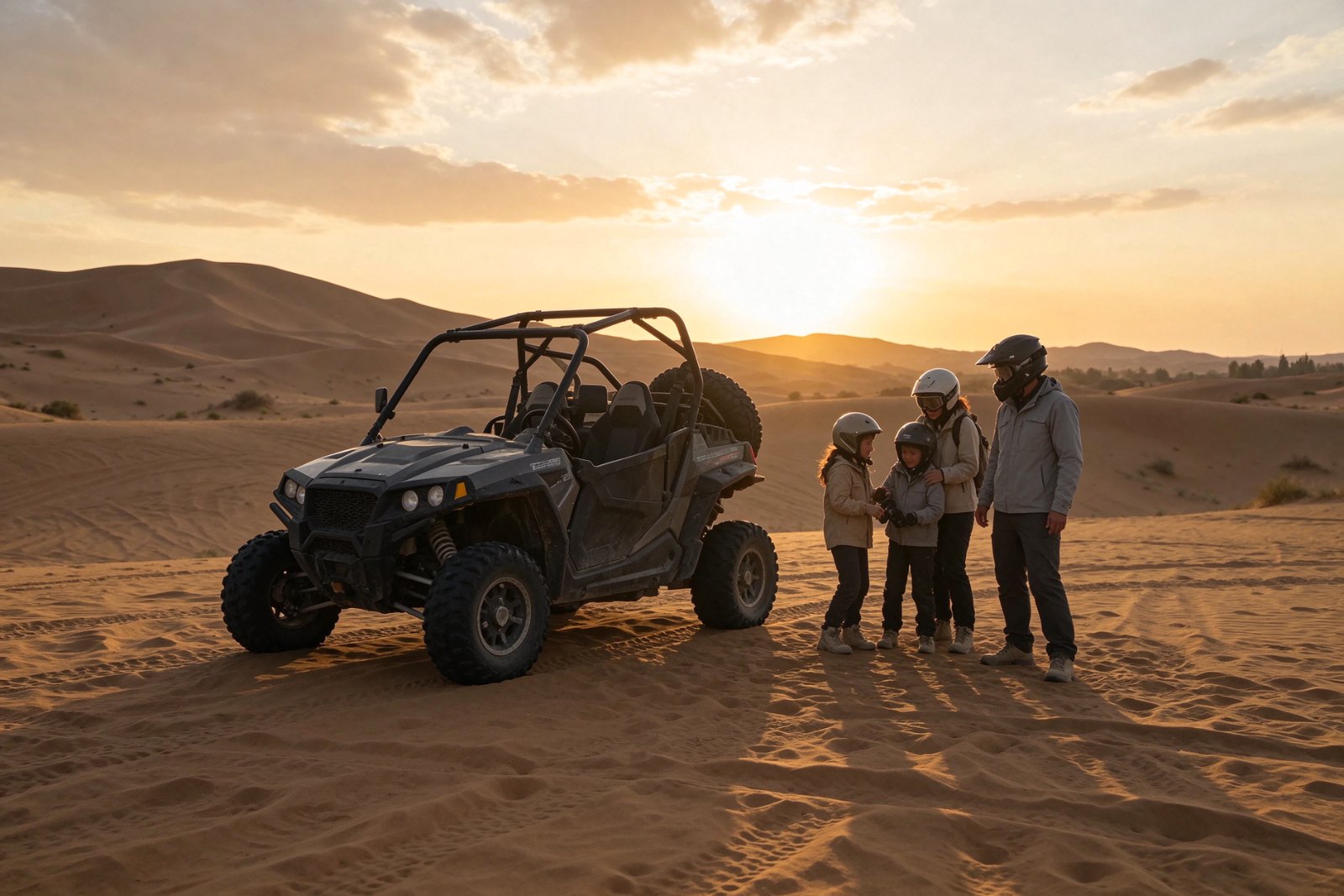
The Imperial Sand Dunes at Glamis are the largest open dune riding area in the United States, and the season opening has become a product event: Polaris chose Camp RZR there to unveil a 400-horsepower race machine this year.
The sand setup that actually works
- Tyre pressure. Lowering pressure widens the contact patch and transforms flotation. Too low and you risk debeading on a hard turn; the right number depends on machine weight and tyre construction.
- Paddle or all-terrain tyres. Paddles are for competition and steep climbs; all-terrain tyres with the right pressure are more versatile for mixed dunes and trails.
- Flags. A tall whip flag is mandatory in most dune areas because crests hide oncoming vehicles. It is the cheapest safety device in off-roading.
- Cooling. Sustained high load in soft sand and hot air is the hardest thermal environment a UTV sees. Radiator cleanliness matters more than any add-on.
- Load discipline. A dune-bouncing machine with four passengers and a cooler is outside its design envelope, however capable it feels.
Why dune culture influences product design
Dune riders buy aggressively and modify aggressively, which makes them a useful test population. Fuel capacity, cooling packaging, cage strength, belt durability and suspension travel all get stress-tested there before the feedback reaches production machines.
MODOU VEHICLE‘s utility ATVs, including the shaft-drive MD-XL4 and MD-XL5, are built for work rather than competition, but they share the qualities sand exposes: sealed intakes, generous cooling and a drivetrain without a belt to slip.
Riding etiquette
Keep to established tracks, avoid vegetation and cultural sites, yield to pedestrians and slower vehicles, and never ride alone in remote dunes. The access that exists today depends on the behaviour of the least careful rider in the group.