
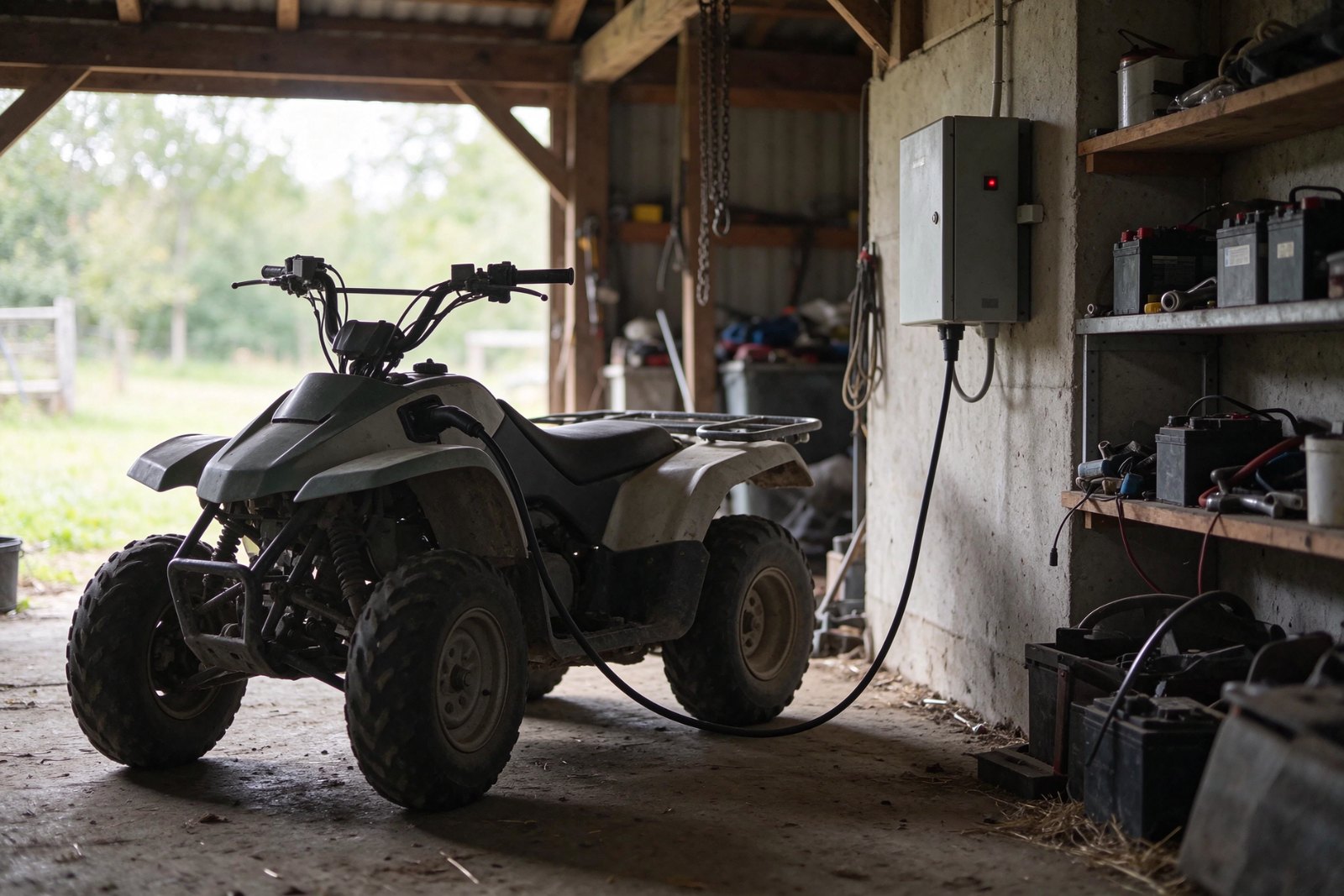
An electric utility UTV quoted at 68 miles of range can cover a full farm workday, or it can run flat by lunchtime. The difference is almost never the machine; it is where the charger is and how the day is split.
Three planning decisions
- Where the charger lives. A dry, covered point near the main work area, on a dedicated circuit, is the single biggest improvement. Charging at the far shed means the machine spends its range getting to the charger.
- When the top-up happens. A 30 to 60 minute top-up at midday often covers the afternoon without a full recharge, provided the pack and charger support it.
- Whether a second pack is worth it. Swappable packs turn charging time into zero-downtime for a fleet, at the cost of pack price and handling equipment.
Cold weather is the real test
Lithium packs lose usable capacity in low temperatures and charge more slowly. A heated shed or an insulated charging cabinet keeps winter range closer to the summer figure. For farms in cold climates, plan for the winter number, not the summer one.
MODOU VEHICLE supplies 72V electric ATVs including the MD-XL1E, MD-XL2E and MD-D2E, with battery capacity matched to short-range agricultural transport rather than long-distance touring. That is deliberate: a machine used in repeated short loops gets more value from a smaller, lighter pack than from a heavy long-range one.
What to measure in the first week
Log the actual distance per trip and the percentage consumed. Most farms discover that their real daily distance is half what they feared, and that a single midday top-up solves the rest. Data from one week replaces months of speculation.